

July 2026 Bible Sunday School Lesson Overview

By Dr. John Hill, Editor
Four Encounters with Faith, Failure, Grace, and Obedience
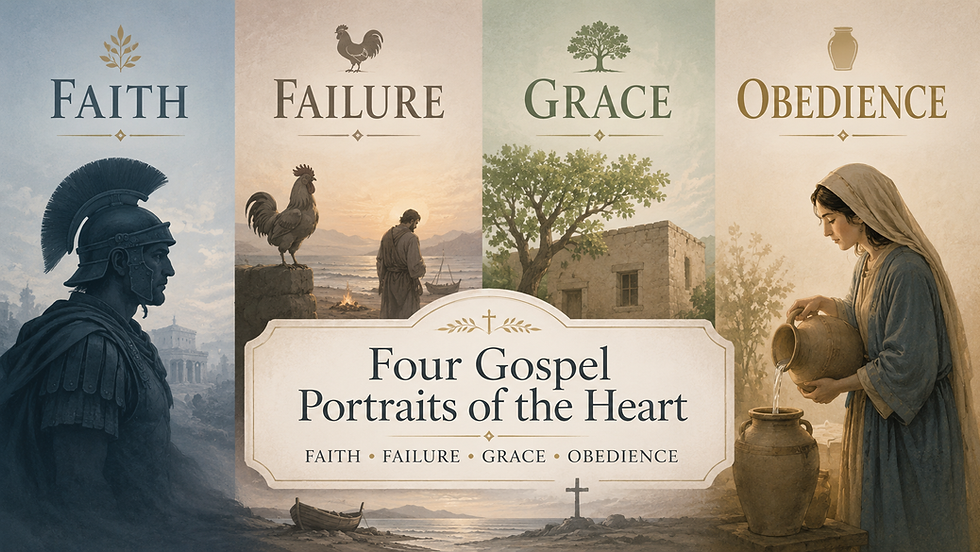
The July 2026 lessons introduce adult Bible teachers and students to four familiar figures in the Gospels: the centurion, Simon Peter, Zacchaeus, and Mary the mother of Jesus. Each lesson gives us a window into how people responded to Christ from very different places in life. One was a Gentile soldier. One was a leading disciple who failed badly. One was a hated tax collector. One was the young woman chosen to bear and raise the Messiah. Together, these passages remind us that Jesus calls forth faith, restores the fallen, seeks the lost, and works through humble obedience.
Lesson One: The Believing Centurion
Matthew 8:5–13
Matthew places the story of the centurion soon after the Sermon on the Mount. Jesus has taught with authority, and now Matthew shows that His authority is not merely in words but also in power. The centurion, likely a Roman military officer responsible for about one hundred soldiers, comes to Jesus on behalf of his servant. That detail matters. In a world marked by rank, class, and power, this man shows concern for someone beneath him socially.
The centurion’s faith is striking because he understands authority. He says, “Speak the word only, and my servant shall be healed” (Matthew 8:8). He does not demand that Jesus enter his house. He does not require a visible sign. He believes that Christ’s word is enough.
Historically, this scene also carries a Jewish-Gentile tension. The centurion is not part of Israel, yet he recognizes something many in Israel missed. Jesus responds by saying He has not found such great faith in Israel. This statement looks ahead to the wider mission of the gospel. People will come “from the east and west” and sit down in the kingdom, while some who presumed upon heritage without faith would be left outside.
For teachers, the key issue is not merely that the centurion had faith, but what kind of faith he had. His faith was humble, intercessory, and confident in the authority of Christ. He teaches us that saving faith is not entitlement before God; it is trust in the person and word of Jesus.
Lesson Two: Simon Peter, From Weakness to Strength
Mark 8:27–29; Luke 22:31–34; John 18:25–27; John 21:15–17
Peter’s story is one of the most honest portraits of discipleship in Scripture. He is bold enough to confess Jesus as the Christ, yet weak enough to deny Him three times. He speaks with conviction in one scene and collapses under pressure in another. That is why Peter is such a helpful study for adult learners. He shows us that real disciples may stumble, but Christ does not abandon His own.
In Mark 8, Peter gives the great confession: “Thou art the Christ.” This is a turning point in the Gospel narrative. Peter sees what many have not yet understood. Jesus is not merely a teacher, prophet, or miracle worker. He is the Messiah.
Yet in Luke 22, Jesus warns Peter that Satan has desired to sift him as wheat. Peter insists that he is ready for prison and death, but Jesus tells him plainly that he will deny Him. In John 18, that denial unfolds around a charcoal fire. Peter’s courage fails, and he refuses association with Jesus.
The beauty of the lesson comes in John 21. After the resurrection, Jesus meets Peter again by the sea. Three times Jesus asks, “Lovest thou me?” The threefold question corresponds to Peter’s threefold denial, not as cruelty, but as restoration. Jesus does not merely forgive Peter privately; He recommissions him publicly: “Feed my sheep.”
Theologically, Peter’s journey teaches grace without minimizing failure. Jesus knows Peter’s weakness before Peter knows it himself. Yet Christ prays for him, restores him, and gives him work to do. Teachers should help students see that Christian strength is not self-confidence. It is dependence upon the risen Christ.
Lesson Three: Zacchaeus, The Publican
Luke 19:1–10
Zacchaeus was a chief publican, or tax collector, in Jericho. Tax collectors were despised because they worked within the Roman taxation system and often enriched themselves through dishonest practices. Zacchaeus was not merely a tax collector; he was a chief tax collector, which means he likely supervised others and benefited from the system.
Luke tells us he was rich and short in stature. His wealth gave him status, but his occupation made him socially rejected. When Jesus passes through Jericho, Zacchaeus climbs a sycamore tree to see Him. That small act reveals more than curiosity. A wealthy man was willing to look foolish just to get a glimpse of Jesus.
Jesus stops, calls him by name, and says He must abide at his house. The crowd grumbles because Jesus has chosen to be the guest of a sinner. But that is exactly the point. Jesus does not ignore sin, but He moves toward sinners with saving purpose.
Zacchaeus responds with repentance that bears visible fruit. He promises to give half his goods to the poor and restore fourfold to anyone he has wronged. His generosity does not purchase salvation; rather, it gives evidence that salvation has come to his house.
The key verse is Luke 19:10: “For the Son of man is come to seek and to save that which was lost.” This lesson gives teachers a clear opportunity to discuss repentance, restitution, and grace. Zacchaeus reminds us that no one is too compromised, too disliked, or too entangled in sin for Jesus to save.
Lesson Four: Mary, The Mother of Jesus
Luke 2:15–19; John 2:1–5; John 19:25–27
Mary appears at key moments in the life and ministry of Jesus. In Luke 2, after the shepherds visit Bethlehem, Mary keeps all these things and ponders them in her heart. She is not presented as someone who understands everything at once. She receives, treasures, and reflects on what God is doing.
In John 2, Mary is present at the wedding in Cana. When the wine runs out, she brings the need to Jesus. His response makes clear that His mission is governed by the Father’s timing, not by human pressure. Yet Mary’s words to the servants remain a model of obedient discipleship: “Whatsoever he saith unto you, do it.”
At the cross in John 19, Mary stands near Jesus in His suffering. There Jesus entrusts her to the beloved disciple. Even in agony, Christ shows care for His mother. This scene reminds us that the incarnation was not sentimental. Mary bore the cost of being near the Son of God.
For teachers, Mary should be presented biblically and carefully. She is not the Savior, but she is a faithful servant of God. She listens, trusts, obeys, and remains near Christ even when the road is painful.
Taken together, these July lessons point to the reach of Christ’s grace. A Gentile soldier believes. A failing disciple is restored. A corrupt tax collector repents. A humble mother trusts and obeys. Each person meets Jesus differently, but each account presses the same question upon us: How will we respond to Him?


Comments